CHRONIC DRAINAGE DIAGNOSTICS · ELGIN, IL
Why Does Your Drain Keep Clogging? Root Causes & Permanent Solutions
If you find yourself calling a plumber or pouring chemical drain cleaners down your pipes every few months, you do not have an ordinary clog—you have an underlying structural plumbing defect. Learn how pipe bellies, ground settling, joint offsets, tree roots, and hard water scale create chronic blockages in Elgin homes.
Structural Defect Diagnostics
The Difference Between a Temporary Clog and a Structural Defect
A standard drain clog occurs when an abnormal item is introduced into a healthy pipe—such as an entire roll of paper towels, a child's toy, or solidified bacon grease. Once cleared with a cable or plunger, a healthy pipe functions normally for years.
Conversely, a recurring clog returns every 3 to 12 weeks during normal household usage. In these cases, the pipe itself has lost its geometric grade or physical barrier integrity, creating an internal trap where ordinary toilet paper and waste inevitably accumulate.
Pipe Bellies (Sags) & Shifting Kane County Soils
Gravity is the only force driving wastewater through residential sewer laterals. Pipes are engineered with a consistent downward slope of 1/4-inch per foot. However, Elgin's freeze-thaw cycles and high water tables along the Fox River Valley can cause soil compaction and subsidence beneath sewer laterals.
When the soil settles beneath a pipe section, the line sags, creating a belly (low spot). Because wastewater must climb out of the sag to reach the municipal main, standing water permanently pools inside the belly. Heavy toilet paper and solid waste lose momentum, settle to the bottom of the belly, and form repeated dams.
Snaking through a belly punches a temporary hole in the sludge, but as soon as the cable is pulled out, standing water re-forms the dam.
Separated Joints & Soil Intrusion
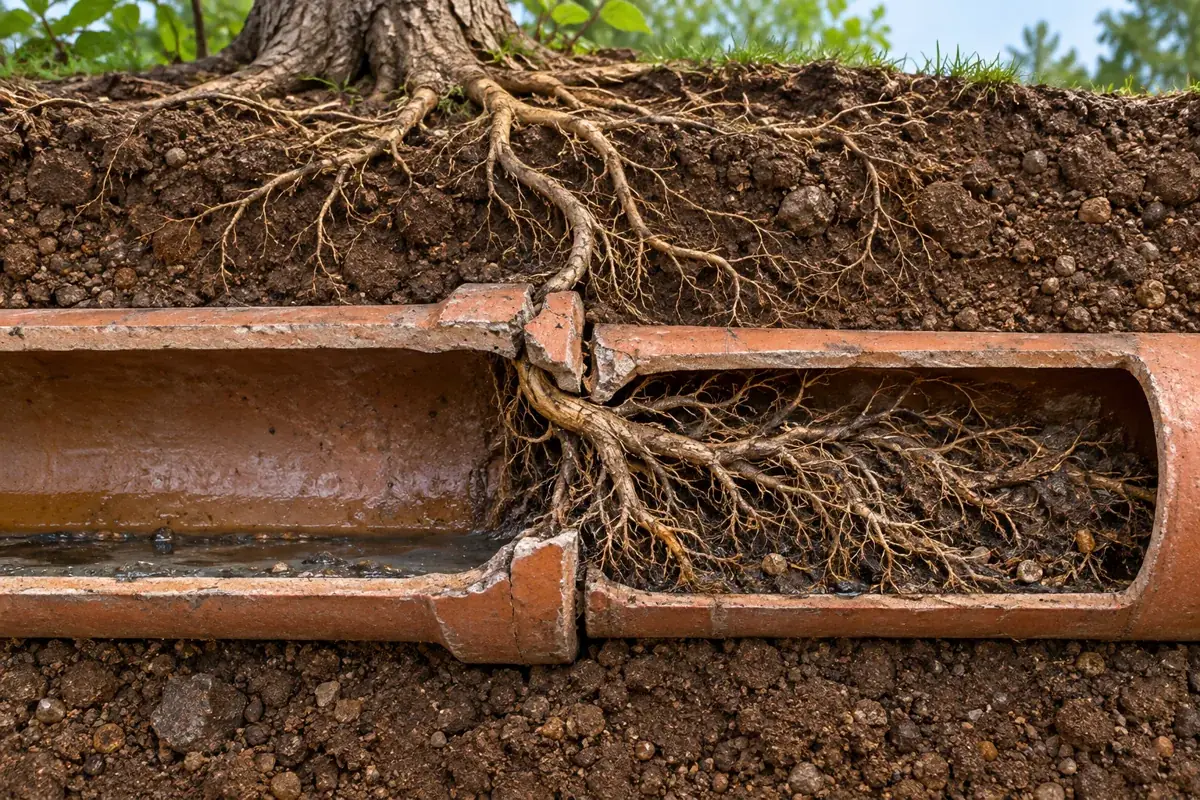
In older Elgin districts (Gifford Park, Spring-Douglas), sewer laterals were constructed from 3-foot segments of vitrified clay pipe joined with mortar. Over decades, tree roots and ground movement push adjacent segments out of alignment, creating an offset joint.
An offset creates a rigid 1-to-2-inch interior lip that catches passing toilet paper. Additionally, eroded joints allow surrounding yard soil and sand to wash into the pipe, creating heavy silt dams that snaking cannot eliminate.
Kane County Mineral Scale & Cast Iron Tuberculation
Elgin's municipal water contains moderate to high levels of dissolved calcium and magnesium minerals. When combined with soap scum and kitchen fats, mineral scale calcifies along the inner pipe walls, creating a rough, sandpaper-like texture.
In older cast iron pipes, oxidation causes tuberculation—jagged mounds of iron rust that build up inside the pipe, reducing a 4-inch sewer line to a restricted 2-inch jagged tunnel.
Permanent Solutions Beyond Repetitive Snaking
If your line clogs chronically, stop spending $300 every four months on temporary cable snaking. Proven permanent solutions include:
- Video Camera Diagnostic Scoping: A video camera inspection pinpoints the exact defect, depth, and footage from your cleanout.
- High-Pressure Hydro Jetting Descaling: High-thrust jetting strips mineral scale and root balls down to bare pipe surfaces, extending clearance for years.
- Trenchless CIPP Pipe Relining: For cracked clay or corroded cast iron, an epoxy sleeve is inserted and cured inside the old pipe, creating a jointless structural pipe without trenching your lawn.
- Targeted Spot Excavation: If a pipe belly or shear collapse is located, excavating and replacing only the 10-foot damaged section permanently cures the problem.