METHOD COMPARISON · ELGIN, IL
Snaking vs. Hydro Jetting in Elgin: Which Clearing Method Is Best?
When your sewer line or drain backs up, should you choose traditional mechanical snaking or high-pressure hydro jetting? Understanding the mechanical differences, price points, pipe suitability, and longevity of each method helps Elgin homeowners select the ideal solution for their plumbing system.
Comprehensive Method Comparison
Snaking vs. Hydro Jetting At-a-Glance
Both mechanical cable snaking and hydro jetting are proven, professional clearing methods. However, they serve distinctly different drainage tasks:
| Feature | Mechanical Cable Snaking | High-Pressure Hydro Jetting |
|---|---|---|
| Primary Mechanism | Rotating steel cable with cutting head. | 3,500–4,000 PSI high-velocity water streams. |
| Clearing Action | Bores a 1″ to 2″ hole through the obstruction. | Scours 100% of the pipe wall circumference clean. |
| Grease & FOG Removal | Leaves sticky grease coating behind on pipe walls. | Completely emulsifies and flushes grease away. |
| Tree Root Treatment | Trims center roots; leaves joint edges intact. | Shears roots flush with joint seams using chain nozzles. |
| Typical Elgin Cost | $250 – $450 (Standard Main Line) | $495 – $850 (Full Lateral Scour) |
| Longevity of Results | 6 to 12 months (roots regrow quickly). | 18 to 36+ months (line returned to like-new condition). |
| Pipe Safety | Safe for almost all pipes, including fragile clay. | Requires pre-inspection camera check on aging pipes. |
How Mechanical Cable Snaking Works
Snaking has been the plumbing industry standard for over a century. A heavy rotating steel cable is pushed through the pipe until its cutting head strikes the blockage. The spinning blades puncture the obstruction, tear apart paper masses, and retrieve hooked debris.
When snaking is ideal:
- Emergency blockages where immediate water drainage is the only urgent goal.
- Retrieving solid objects (toys, toothbrushes, hand towels) accidentally flushed.
- Older, fragile vitrified clay pipes that cannot safely withstand 4,000 PSI water pressure.
- Budget-conscious emergency service visits.
How 3,500 PSI Hydro Jetting Works
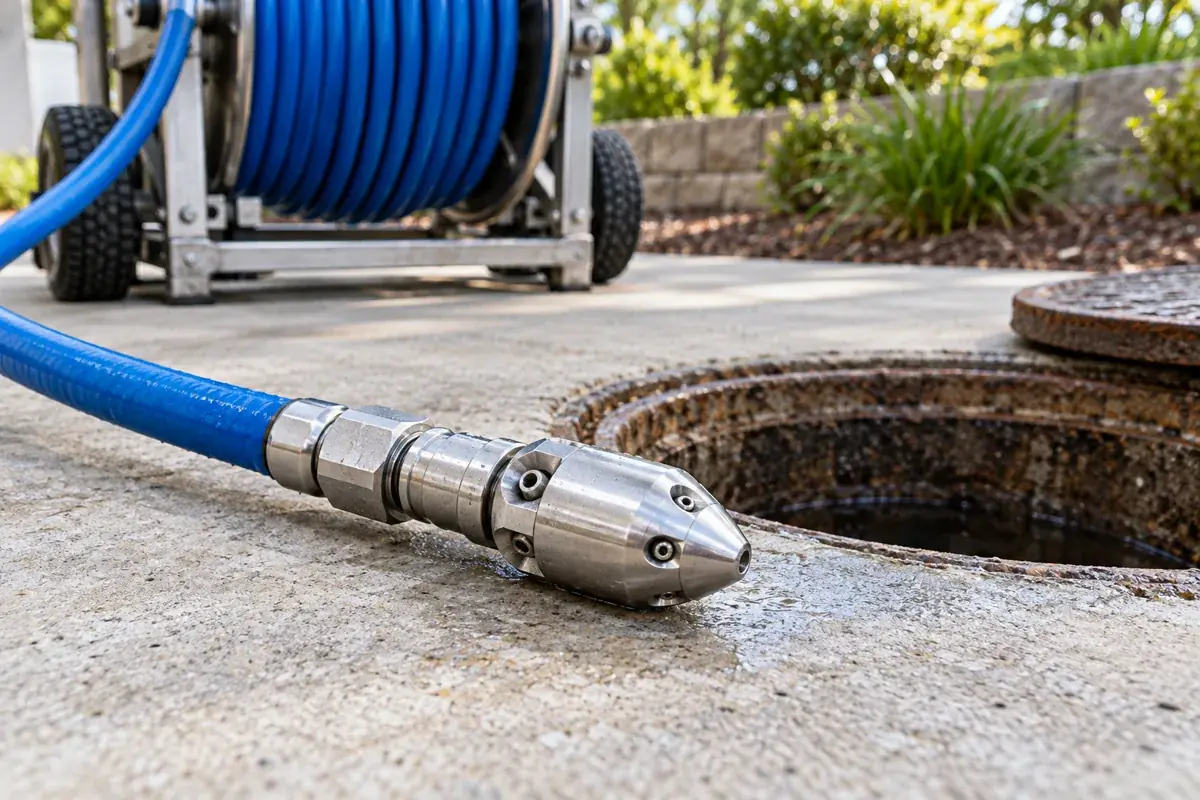
Hydro jetting does not merely poke a hole through a clog—it completely restores the original inside diameter of the sewer pipe. Forward-facing penetrating jets blast through blockages while multi-orifice rearward jets scrub grease, soap scum, and mineral scale off every square inch of the internal pipe wall.
When hydro jetting is ideal:
- Heavy kitchen grease accumulation in restaurants or large families.
- Chronic recurring tree root infestations in older Elgin districts.
- Restoring old cast iron pipes choked with heavy rust scale and tuberculation.
- Preparing a sewer lateral for CIPP trenchless pipe lining.
Pipe Material Suitability in Elgin Homes
Before selecting hydro jetting, a technician must inspect the pipe material:
- Modern PVC & ABS (Post-1980): Completely safe for 4,000 PSI hydro jetting. Jetting strips all sludge without causing abrasion.
- Vitrified Clay Tile (Pre-1970 Elgin): Generally safe for moderate-pressure jetting (2,500–3,500 PSI) with root nozzles, provided a preliminary camera scope verifies the pipe has not collapsed or suffered shear fractures.
- Aging Cast Iron: Excellent for descaling, but technicians adjust pressure to avoid puncturing paper-thin corroded pipe bottoms.
How to Decide for Your Property
If your main line has clogged for the first time in five years, standard mechanical cable snaking ($250–$450) is usually sufficient. However, if your line has backed up twice in the last 18 months due to grease or tree roots, paying an extra $250 for hydro jetting ($495–$850) is far more economical than paying for recurring snaking visits every six months.